

In this newsletter
This week’s developments

Source: AEC field notes
🎯 Study: AI doesn't fire young professionals, but fewer are hired
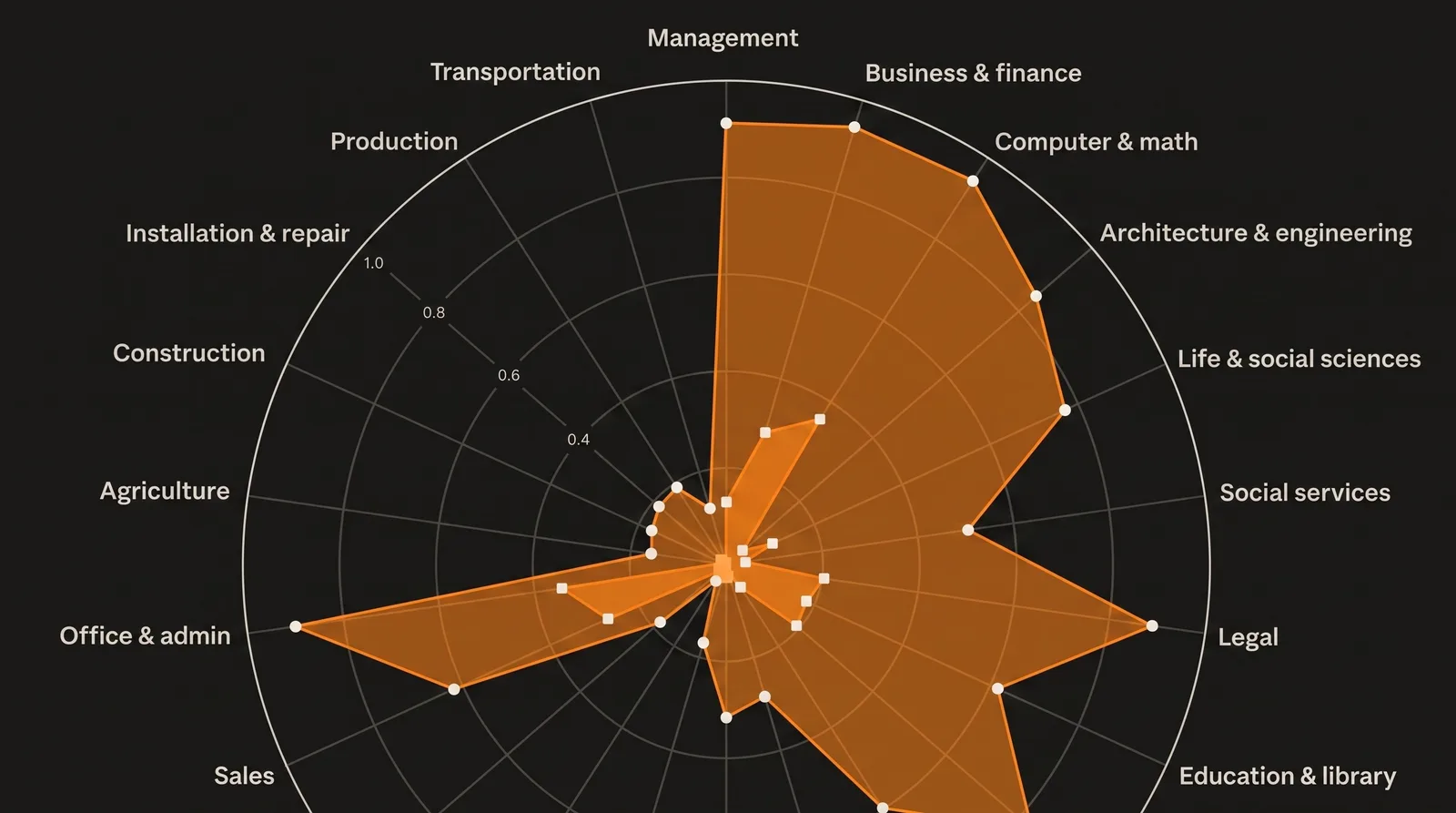
In summary: Stanford University just updated their 'Canaries in the Coal Mine' study, finding 22-to-25-year-olds in AI-exposed jobs now sit 19% below less-exposed peers, up from 13% a year ago, driven almost entirely by hiring, not firing.
The details:
The study pulls its numbers from ADP, the largest payroll-processing company in the US
Jobs where AI mainly substitutes for tasks show the steepest drops, while roles where it complements workers stay flat or keep growing
The effect isn't just for young professionals: jobs with a limited relationship to experience show the same pattern in workers up to age 40
Why it matters: In Construction, like in other industries, exposure to this risk differ by type of work: jobs involving highly codified, repeatable knowledge are more vulnerable to automation (e.g. routine drawing revisions, building regulations checking, document control and take-offs). AI will augment people who already have expertise rather than replace them, because judgment, context and accountability are harder to automate.
AEC's likely new hire: Individuals that combine AI fluency with real-world judgment and responsibility
Source: Massachusetts Institute of Technology (MIT)
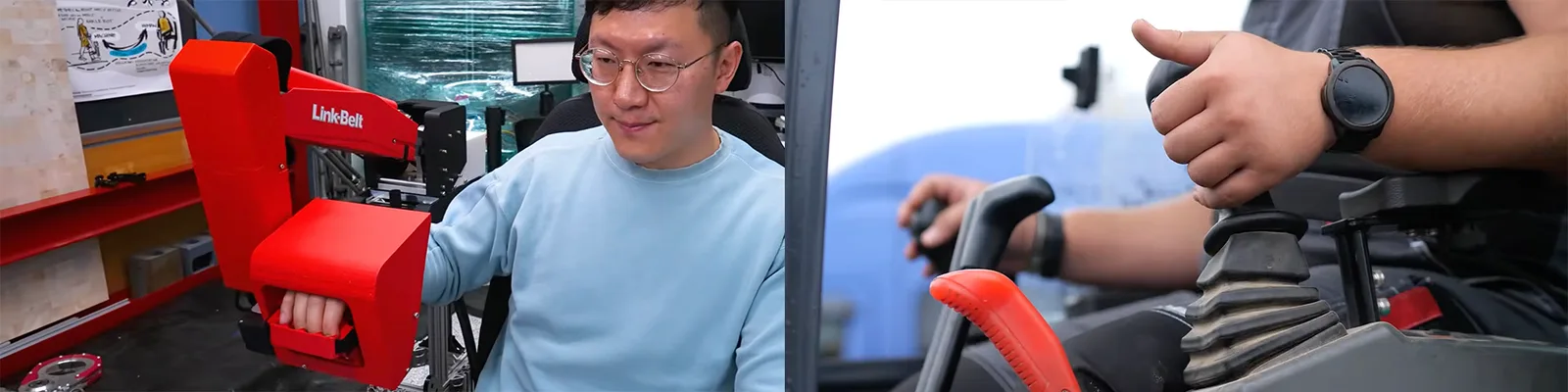
🦾 MIT's tiny arm turns excavator novices into experts
In summary: MIT engineers just unveiled a hand-held controller shaped like a miniature excavator arm that lets first-time operators match experienced drivers' performance from their very first session, no joystick training required.
The details:
Dubbed the World-Space Interface, the controller pairs a miniature mechanical with the arm of an excavator
In week-long trials across 15 simulated sites, novices using the arm matched expert operators from day one; joystick novices stayed behind even after training
The project began in 2018 with Sumitomo Heavy Industries, which flagged Japan's aging pool of skilled excavator operators
Why it matters: For an industry short on skilled operators, a controller that skips years of joystick training could open excavator seats to a far wider pool of hires. It also nudges teleoperation closer to reality, letting an operator run a digger from a trailer instead of the site itself.

Source: AEC field notes
🧠 AI becomes a second pair of eyes in a live brain surgery
In summary: UCLH surgeons in London just used a UCL-built AI model live for the first time, reading the surgical camera feed in real time to flag critical nerves and blood vessels while removing a patient's brain tumour.
The details:
The operation was in a part of the brain where blood vessels and nerves controlling vision are tightly packed together, and a millimetre can make a critical difference and lead to death, blindness or stroke
The AI supported the surgical team helping identify risky areas to avoid while removing as much tumour as safely possible
The AI system was developed at the UCL Hawkes Institute, a multidisciplinary research group at UCL focused on advancing healthcare technologies
Researchers trained and evaluated the system using a large collection of annotated endoscopic pituitary surgery videos from previous operations
Why it matters: Having a AI model specifically trained on a high-stakes construction task could de-risk costly mistakes. Think tunnel boring, nuclear maintenance, offshore wind installs, or mining. Cameras and sensors could provide real-time data to spot abnormalities not otherwise visible to the naked eye.

Source: AEC field notes
🧪 AI-designed viruses that kill real bacteria could develop new bio based materials
In summary: Stanford researchers just used their Evo 2 AI model to generate whole bacteriophage genomes from scratch, synthesising nearly 300 candidates and creating 16 that could infect and kill E. coli, including types of it that naturally evolved phages could not kill.
The details:
Evo 2 in an AI model trained on DNA datasets that includes all known living species—and a few extinct ones
Evo 2 can predict the form and function of proteins in the DNA of all domains of life, identify molecules useful for bioengineering and medicine, and run experiments in a fraction of the time it would take a traditional lab
The model has now been made open source and free of charge. Anyone can download Evo 2 and design new genomes themselves
Why it matters: Models like Evo 2 could design bio-based materials: engineered microbes, enzymes, biological additives, and potentially organisms that manufacture or modify materials. Different models could exist in the future to invent things like new steel alloys, concrete formulations, ceramics, or composites.
A broader ‘team’ of specialist models is needed to bring a material into construction: models for molecular/material discovery, physics simulation, manufacturing constraints, performance prediction, and optimisation.
Our next story covers another layer of that future pipeline

Source: AEC field notes
🥼 London lab's agent outperforms OpenAI and Anthropic at one important task
In summary: London lab Inherent just revealed Faraday, an AI agent built on a small open source model, that outperformed Anthropic's Claude Opus 4.8 and OpenAI's GPT-5.5 at independently replicating published scientific research
The details:
Faraday runs on Qwen 3.6, a small open source 27-billion-parameter model, yet beats much larger frontier models at reproducing published results
Chief scientist Edward Hughes said beating rivals wasn't the goal — training "research taste" via reinforcement learning was. Their mission is recursive self-improvement to discover new knowledge
Inherent raised a $50 million seed round in May
Why it matters: Faraday has the potential to create a verification loop between different AI systems. In material research, for an AI could propose thousands of candidate materials, while a Faraday-style agent could filter those ideas before they reach a physical laboratory. The final materials that make it to construction would still undergo the same required physical testing, but far fewer bad or unpromising candidates need to reach the physical-testing stage at all.
AEC's likely new hire: Materials Verification Engineer, running the AI pipeline alongside Material Scientists
Source: AEC field notes
🤖 Start using frontier AI models for free
In summary: You don't need to pay for powerful LLMs, especially while learning the basics. Unprecedented investment is subsidising free access, in the hope profits follow.
The details:
Here are the major players and how to use them for free:
ChatGPT (OpenAI): Sign up for an account. Free users now get unlimited text chats with GPT‑5.6 Luna, OpenAI's fastest, most affordable model. Pro tip: try the desktop app to get used to the interface
Claude (Anthropic): Free tier gives roughly 15–40 short messages per 5‑hour window, depending on the model and task. Pro tip: also try the desktop app to get used to the interface
Gemini (Google): A Google account unlocks free usage, with daily caps that vary by model (Google doesn't publish exact numbers)
Don’t discard Gemini so easily: Google has built a strong ecosystem around it, using the same Google account. AI Studio lets you test all their models for free, and can even ground answers in live Google Search results. Gemini Notebook lets you upload documents and query them. Both use your existing Google account.
Why it matters: More advanced usage - custom instructions, higher limits, stronger models - needs a subscription. But even at £20/$20/month, these plans likely don't cover the companies' actual costs yet. Competition is fierce, and we've all been handed access to powerful tools - a great time to learn them and judge their value for yourself.
Trending AI Tools this week
Gemini Omni 1.1 Flash (Google DeepMind): release of one of the most powerful video editing models
Qwen3.8-Flash-Next (Alibaba): open-weight preview of the Qwen4 architecture
Model Hardware Standard (Anthropic): research preview that lets AI agents safely operate lab and manufacturing hardware via a standard protocol
That’s it for today!
See you next week with more exciting updates,
Eduardo - The human behind AEC Field Notes