

In this newsletter
This week’s developments
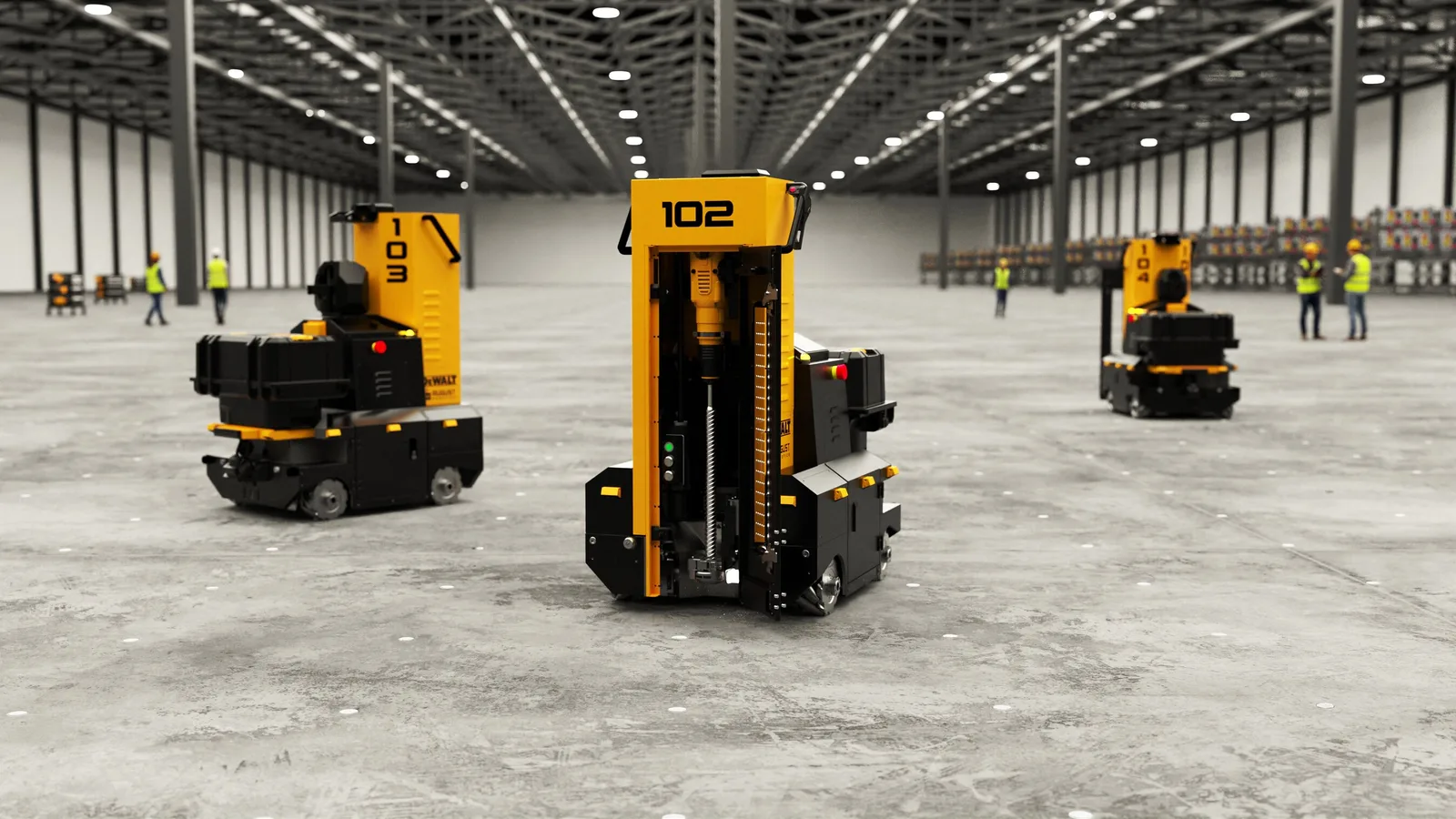
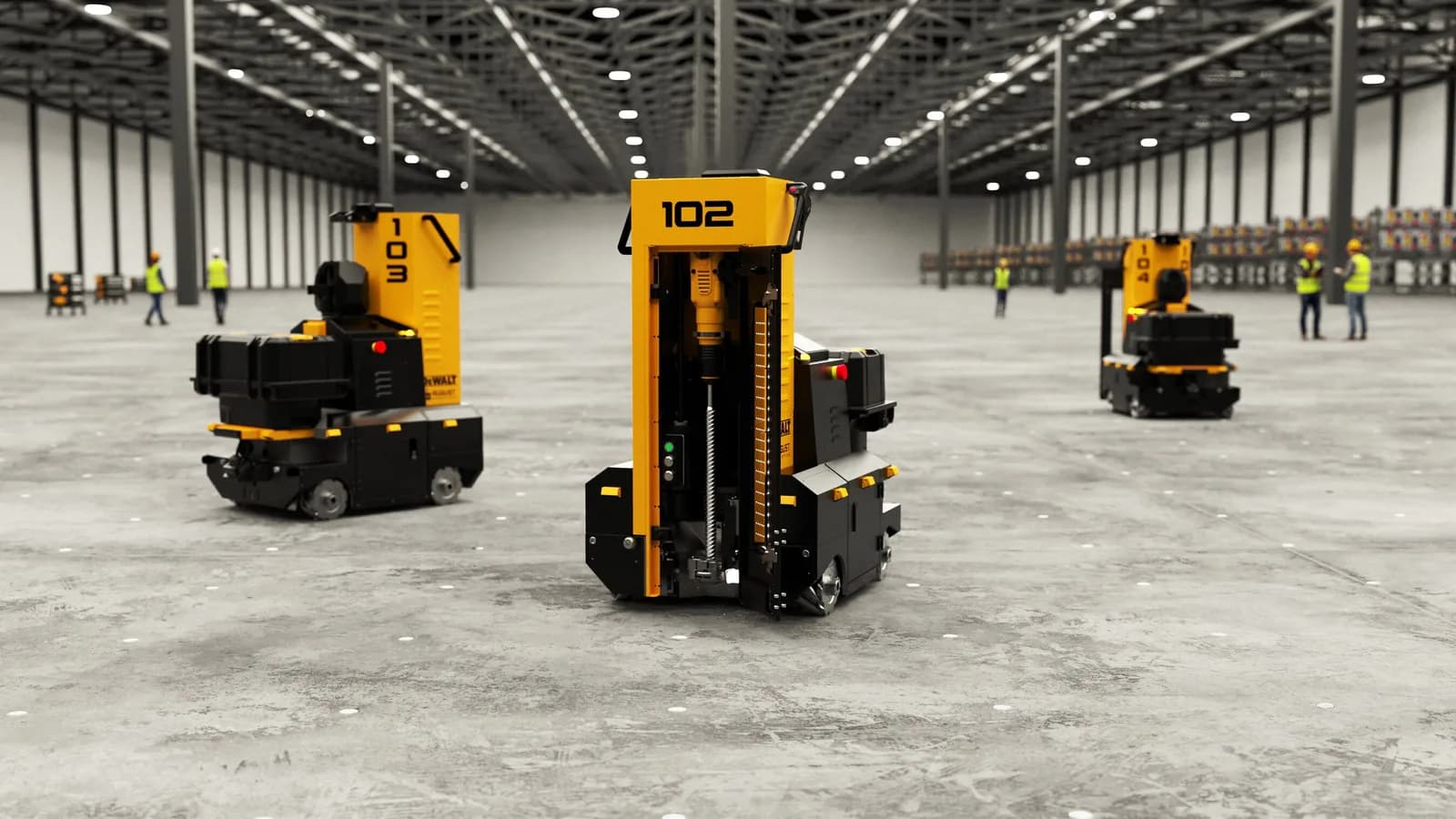
Source: DeWalt & August Robotics
🤖 DeWalt puts drilling robot fleets on data centre sites
In summary: DeWalt and August Robotics put DALE on commercial lease three months ago, a fleet of robots that drills anchor holes in data centre slabs, with DeWalt claiming four of them finish in six days what a 10-person crew drills in seven weeks. Here it is in action.
The details:
DALE takes hole positions from the layout points in the building's CAD model and drills each one to within about 3 mm, according to The Robot Report
DeWalt supplies the rig, and August Robotics the autonomous base and fleet software from Lionel, a floor-marking robot that measures each mark independently
The '7x faster' figure pits 10 people over seven weeks against four robots over six days on about 7,000 holes, leaving out rebar drilling and seismic phases
DeWalt's headline numbers come from a year-long pilot with one unnamed tech client: 230,000+ holes at 99.97% accuracy across 26 construction phases
Why it matters: Drilling these holes by hand takes a real toll on crews: it's repetitive and it releases respirable crystalline silica dust, a major health risk on site. DALE gives contractors a fleet of single-task robots, fed straight from a digital model and leased from a tool brand site teams already buy. Expect adoption to be quick!
AEC's likely new hire: Robot fleet supervisor
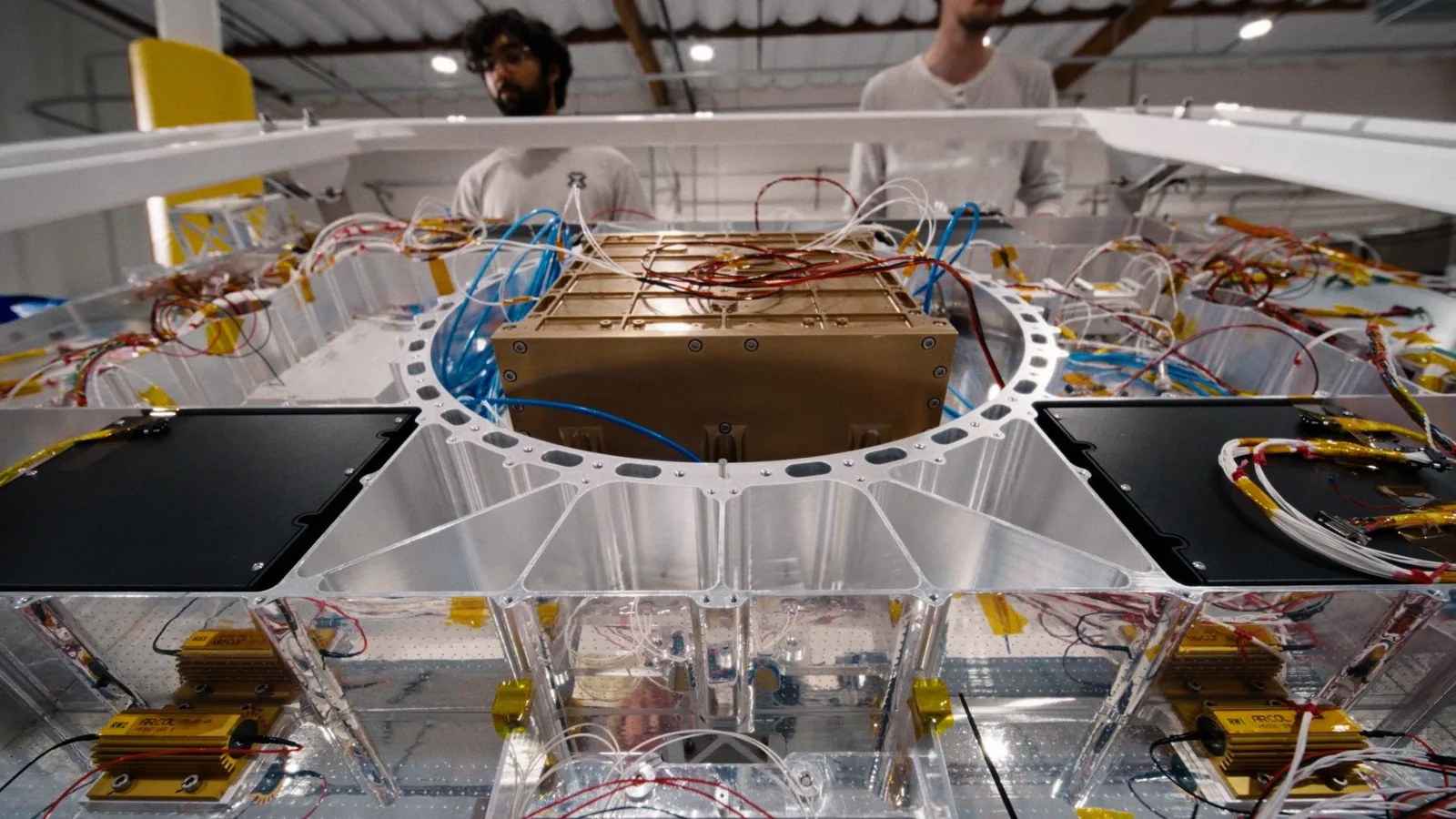
Source: Xona Space Systems
🛰️ Xona readies a centimetre-level rival to GPS
In summary: Xona Space Systems is launching six satellites on a SpaceX rocket this month to start beta testing Pulsar, a commercial GPS alternative promising centimetre-level positioning and a signal strong enough to work indoors and between tall buildings.
The details:
Two of the six were built in-house in Burlingame, California, as the basis for a planned 258-satellite constellation; the other four use an Aerospacelab platform (Belgium)
Existing GPS receivers can pick up Pulsar after a software change, and Trimble is bringing devices launched as early as 2018 up to Pulsar capability
Trimble and Xona are also working to deliver Trimble's correction services over Pulsar, which Xona says removes the need for a constant mobile data stream
Xona has raised just over $300M since 2019, including $20M from the US Space Force, and hopes to fully cover the US, Europe, Japan and South Korea by 2028
Why it matters: Autonomous construction robots and survey drones today lean on Real-Time Kinematic (RTK), a technique for correcting satellite positioning from metre-level accuracy down to a centimetre or two, but needs a base station or mobile data corrections and struggles under cranes or between tall buildings. Pulsar's will provide corrections and a stronger signal from orbit, on receivers already installed on machines.

Source: Mistral
🇪🇺 Europe’s best AI model rivals US & Chinese ones
In summary: French AI lab Mistral just released a preview of Mistral Large 4 (Le Chonk), a 1 trillion-parameter multimodal model trained in its own European datacentres, with open weights due by the end of October so customers can run it on their own hardware.
The details:
Mistral says it trained the model from scratch in Europe, and that its European deployment runs end to end under European law, independently of other digital providers
Demos show it checking mechanical parts in technical drawings and scanning gigapixel satellite imagery, aimed at engineering and earth observation work
France's armed forces ministry has a framework deal to run Mistral models on its own infrastructure, and Mistral lists TotalEnergies and Veolia as customers
Artificial Analysis ranks it top outside the US and China, but five Chinese open models score higher, and Mistral’s model costs over 4x as much per task
Why it matters: Sovereign AI models will become the bedrock to improving national critical infrastructure. Grid operators, aviation authorities, rail authorities, or water utilities do not want to hand over their schematics and GIS layers to closed labs or foreign data centres. AEC firms working on these projects may be required to use models run nationally in critical infrastructure appointments.
Source: General Context Labs
🧊 New benchmark grades AI on building 3D objects as code
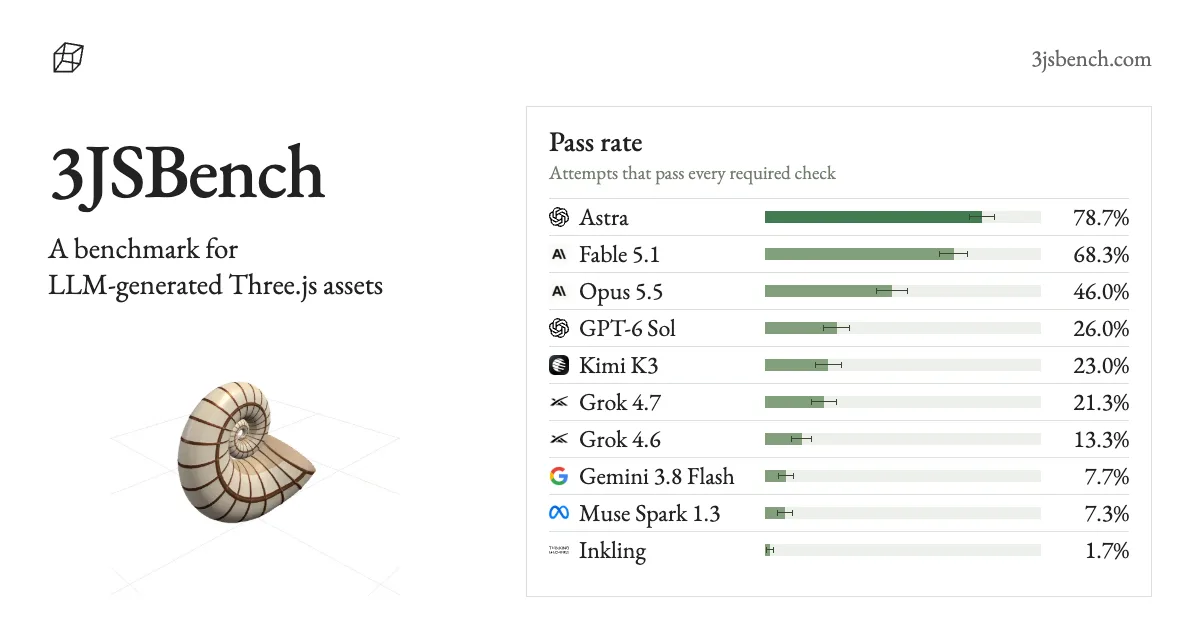
In summary: General Context Labs (GCL) just launched 3JSBench, an open benchmark that has 10 AI models build 100 3D objects as Three.js code and grades every attempt automatically - the best model passes 78.7% of the time, and the weakest just 1.7%.
The details:
Each model gets three one-shot attempts per task, and an attempt passes only if every required check passes, with no human judge in the loop
For a restaurant storefront for example, it checks the name is readable, the awning is one piece and slopes outward, the sign touches the facade and nothing flickers
OpenAI's Astra leads, ahead of Anthropic's Fable 5.1 and Opus 5.5, yet Opus 5.5 narrowly tops a blind vote of 11,702 human comparisons
The 100 task prompts are public, but the grader code is still "coming soon", and GCL says its checks don't cover whether an object actually looks good
Why it matters: What happened to software developers in the past couple of years is the best preview AEC office staff have. AI didn't take the job, but a software developer's value moved from writing code to setting the brief and constraints, then signing off the result. Modelling isn't all architects and engineers do either, but their value will move off it the same way, and AI labs now have a score to train against.
Source: AEC field notes
👮♂️ AI Agents, in plain English
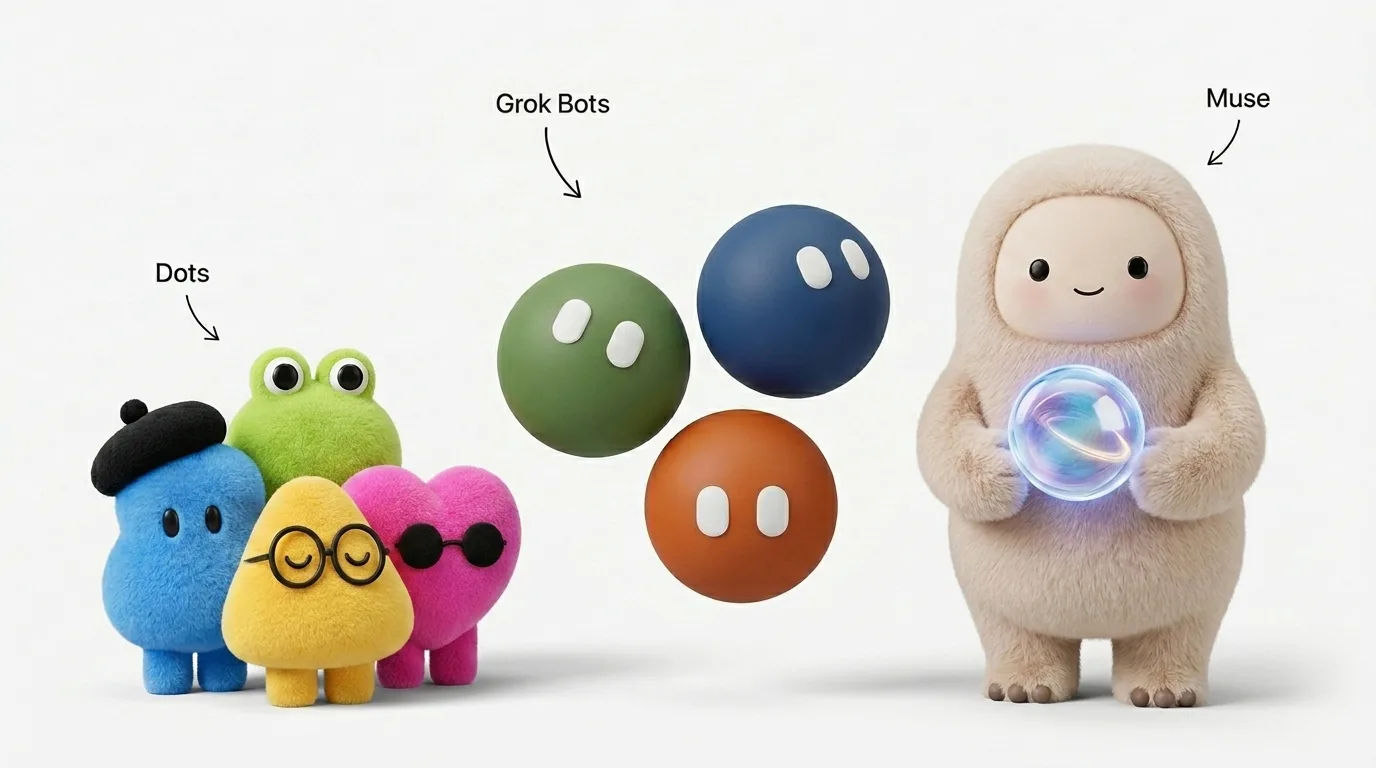
In summary: The release of always-on personal AI agents such as Muse, Grok Bot and Dots have put the buzzword “AI agent” back in the spotlight. The term has no official definition, but once you understand the basics you could soon be creating your own.
What is an AI agent?
There is no agreed definition, but there is a working consensus on the ingredients.
Not an AI Agent: Most people use AI through chat or voice. You ask a question and get a response. Or you ask for a simple task. I often ask Claude for example to summarise, translate, correct spelling, and rewrite concisely.
You can create a skill for tasks you repeat, so the output is consistent (not created one yet? See our guide).
You can also connect tools. I use my connections to Notion, Excel or Google Drive often, so it gives better answers with access to my information.
None of this makes it an agent, because you still decide each step.
AI Agent: In Anthropic’s words, an agent is a system where the model directs its own process and tool use to complete a goal. The ingredients therefore are:
A goal, given by a person (or another agent)
An AI model that decides the steps for itself
Tools, so it can act
A loop: after each step it checks the result and decides what to do next, until the goal is met
Always-on AI agents are AI agents that have access to their own virtual computer, so they can complete goals even when your computer is off.
Why and when should you use one?
Use an agent when the task has many steps, the information lives in several places, and you cannot write the steps down in advance because they depend on what turns up along the way.
Anthropic's own advice is to start with the simplest thing that works and add an agent only when it clearly does better. Don’t use an agent when:
You have one question. Just ask the chatbot.
The steps are identical every time. A fixed automation is cheaper and more predictable.
A mistake would be expensive and hard to spot.
Agents are slower and cost more credits (tokens) than a single question, and an early error can carry through every later step.
Why AI Agents matter: They close the gap between advice and action. Think of one as a capable new junior, and you will have the patience to set one up: brief it as you would any new starter, correct its early mistakes, and accept that accountability stays with you. Before long, you can trust it to work on specific goals without you watching.
I’m soon planning to release a quick tutorial to set-up your own for the first time. Stay tuned!
Trending AI Tools this week
GPT-6 with Intelligent UI (OpenAI): GPT-6 brings interactive answers to ChatGPT
Claude Haiku 5.5 (Anthropic): Small model from $0.10 per million input tokens; Anthropic puts average cost 75% below Haiku 4.5. Haiku is an incredibly underated model I enjoy using often
Nano Banana 2.1 (Google): Update to one of the popular image generating model in Architecture.
EmbeddingGemma 2 (Google): 740M-parameter open-weight multimodal embedding model for text, code, images, audio and video. This model will make so many exciting professional and personal projects possible!
That’s it for today!
See you next week with more exciting updates,
Eduardo - The human behind AEC field notes
London, UK