

In this newsletter
This week’s developments
Source: Anthropic
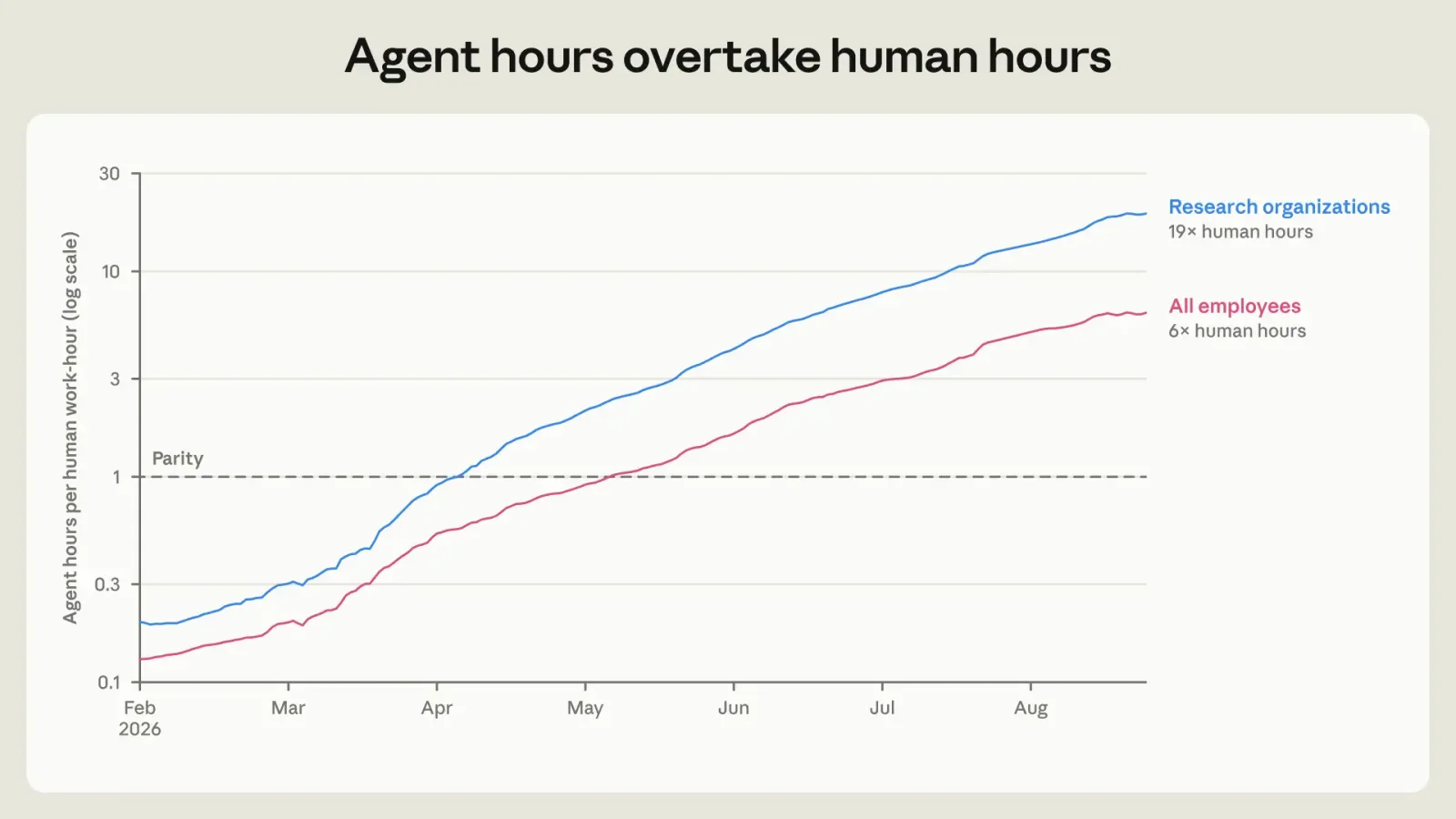
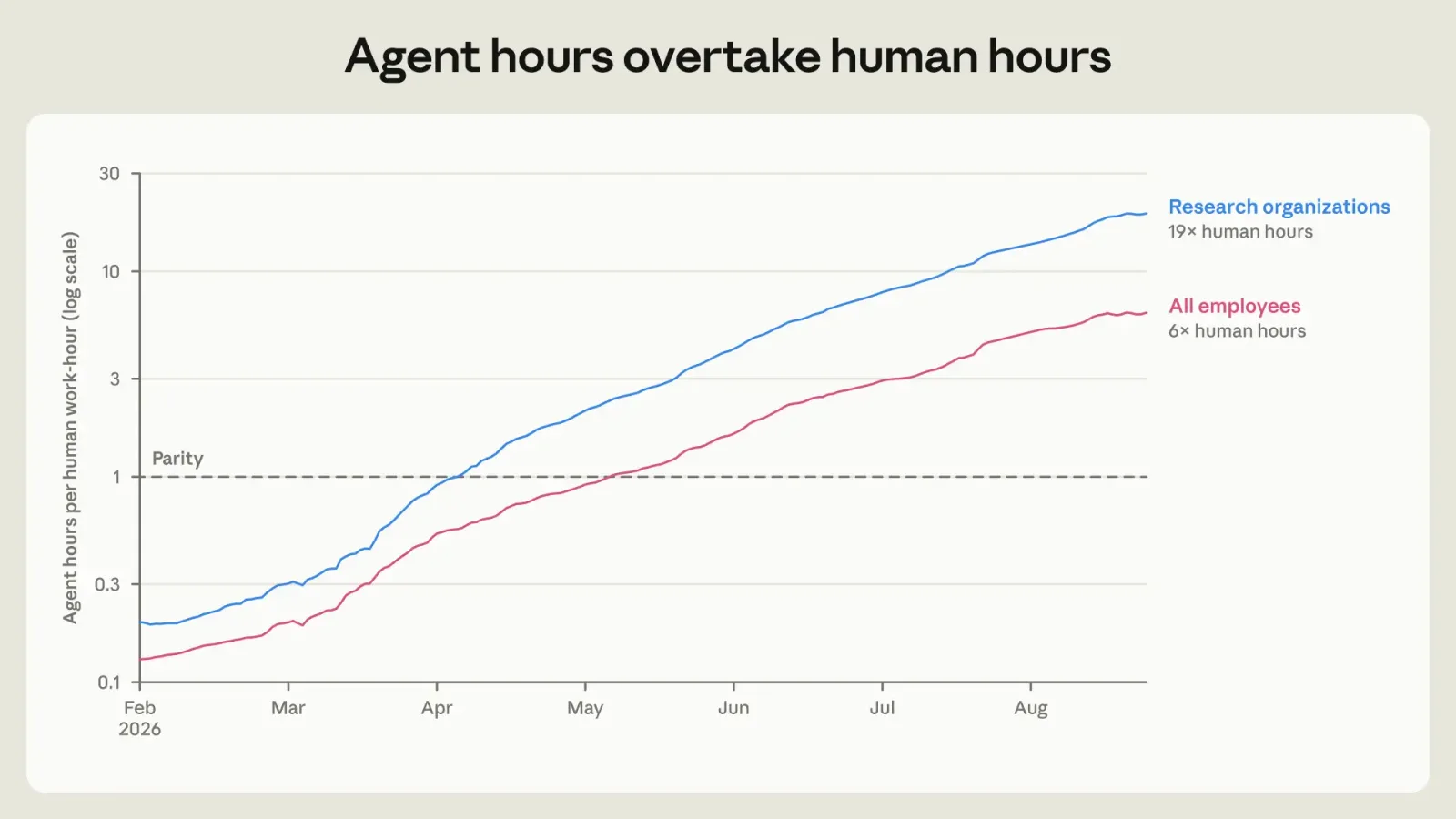
📉 Anthropic's AI agents now log 6x more hours than staff
In summary: Anthropic just published data on its own workforce showing that by August, AI agents logged six times the hours of the staff directing them, while the junior share of its technical hires fell from 27% to 9% since spring 2025.
The details:
Anthropic's chart shows changes and updates to software by engineer up 5.1x since December 2025, with contracts processed per lawyer and queries per data scientist both up 3.1x
Meta-work such as agent specs and monitoring rose from 10% to 22% of Claude sessions, and reading all agent output would fill over half a non-technical week
The median employee spends 20% more time in meetings than a year ago and technical ICs 16% more, with staff calling face-to-face time indispensable
Hiring scorecards that note creative use of AI tools have tripled for technical roles since 2024, with autonomy and judgement the fastest-rising traits
Why it matters: I read Anthropic’s article as a window into the future of employment in AEC. There are two takeaways which AEC firms will mirror First, the value of technical tasks will diminish. Doing an audit of your own week is the easiest way to pinpoint which things you do will loose value. Second, the value of judgement and taking responsibility will increase. So will the value of soft skills, human interaction, and being the person having the conversations no AI agent can hold for you.
AEC's likely new hire: Individuals that combine AI fluency with real-world judgment and responsibility
If you are interested to read similar stories, see also:
Source: Microsoft / TKE
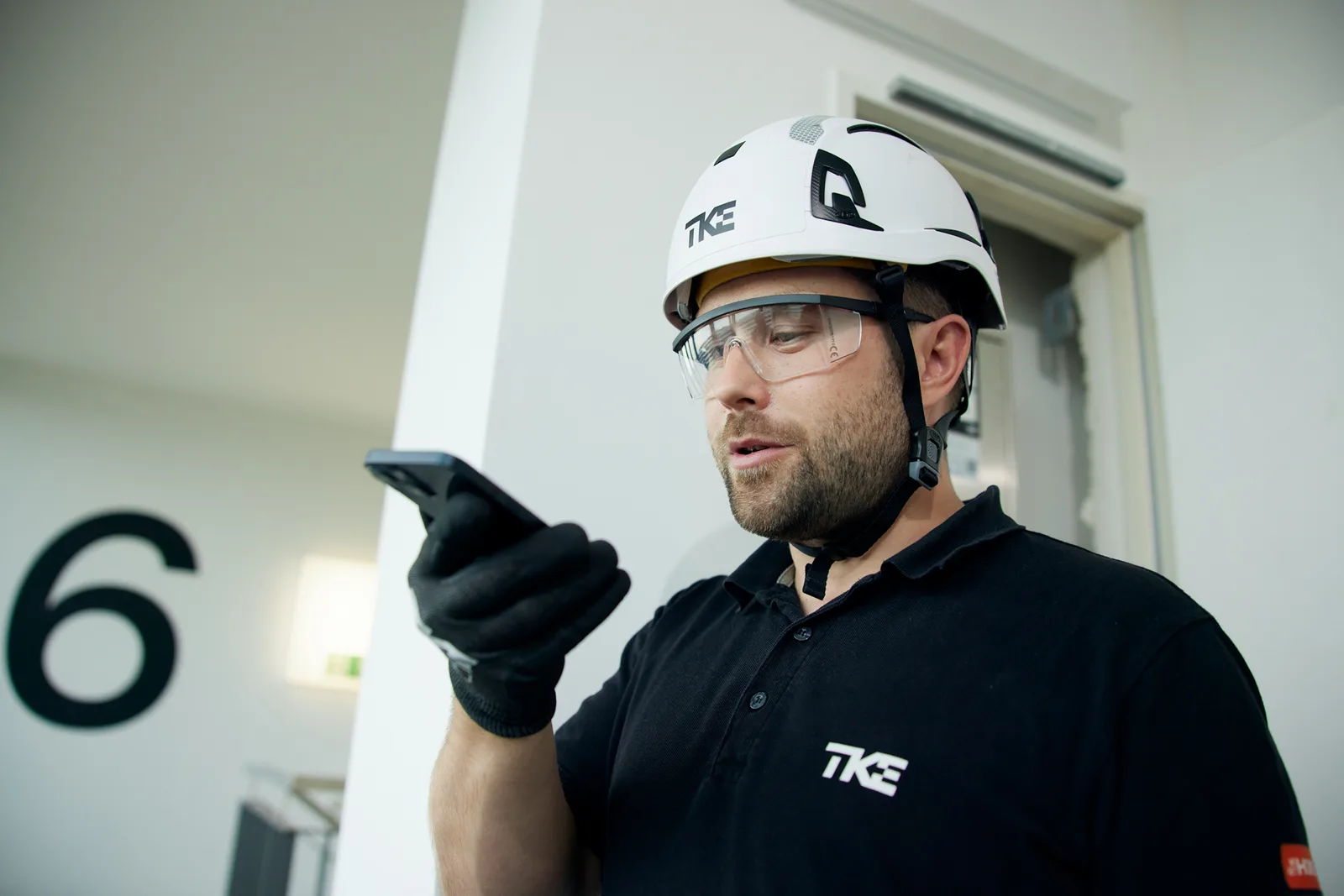
🛗 TK Elevator's AI agents brief technicians before arrival
In summary: TK Elevator just detailed an AI app, built on Microsoft Foundry, that tells its service technicians which lift, floor, fault and tools to expect before they enter a building, then debriefs them by voice once the job is done.
The details:
The app sits on a decade of connected-lift data, with nine digital operations centres using machine learning to give every connected unit a health score
After each visit a voice agent asks follow-up questions and logs the answers, so the next technician can search what the last one actually found
TKE says its 25,000 technicians maintain 1.4M lifts and escalators, which carry 1.5B passengers a day, across more than 100 countries
TKE says a 2025 US pilot with connected units avoided 20,000 unplanned visits and cut callbacks by over 40%, though it doesn't credit the agents alone
Why it matters: AEC firms often lose staff midway through multi-year projects, and replacements spend weeks catching up. Making human decisions visible to agents and writing standing material that agents work from, as TKE does or some other way, can ensure project knowledge stays within the firm, and reduce project onboarding time. For example, it could brief a PM before their first meeting or hand an architect a live job with its history attached. The hard part is getting teams to log as they go!
AEC's likely new hire: Design manager, responsible for keeping a project's information well structured and machine readable
Source: Two wireframe drawings of an electric vehicle chassis on a black background.
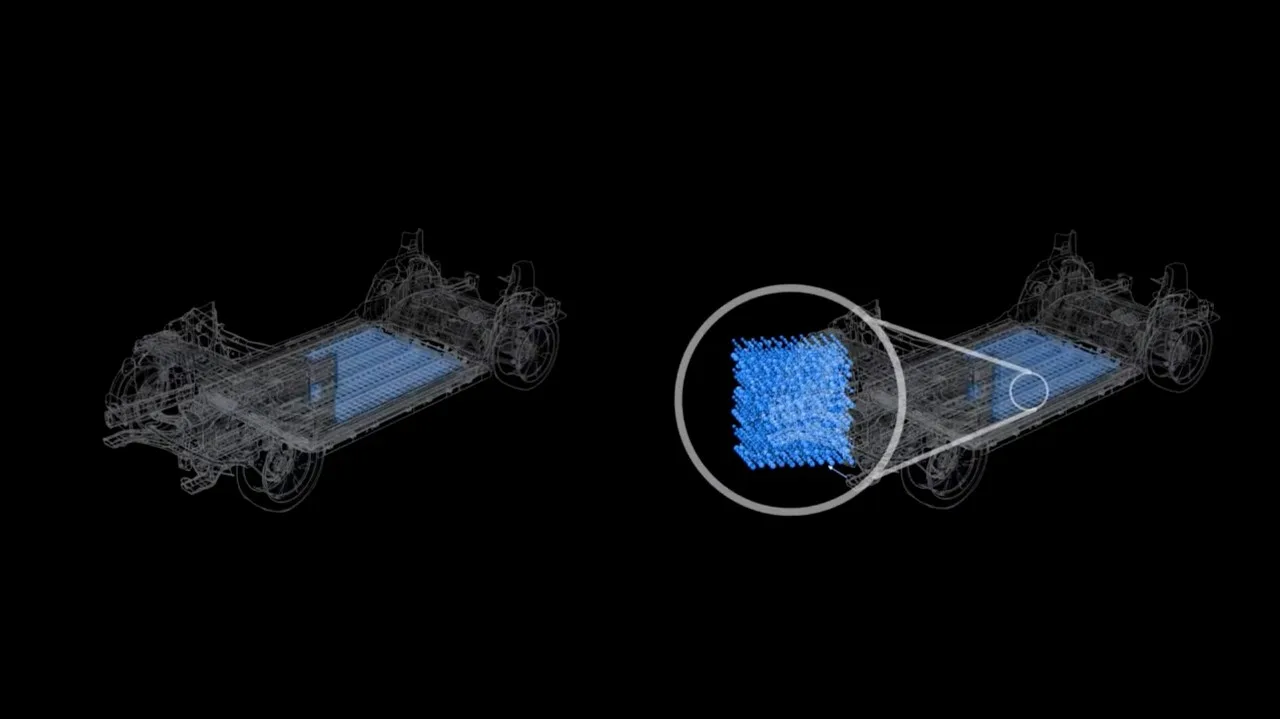
🔋 GM tested 300,000 battery designs before building one
In summary: GM just pitched a new EV battery as proof that AI and virtual testing can halve car development, after simulating 300,000+ designs over 300 million CPU hours (the equivalent of one computer running for 34,000 years) before building a cell and getting the pack approved in a month.
The details:
GM aims to cut vehicle development from four or five years to about two using AI and virtual testing, though the new cells won't hit volume until 2028
The cells use lithium manganese-rich (LMR) chemistry, which GM claims stores 33% more energy than China-dominated LFP cells at a comparable cost
GM says Computational Fluid Dynamics simulations runs that once took up to 60 hours now take 60 seconds, and that decades of GM engineering data now feed its AI tools.
Why it matters: Simulations which are common in the design of buildings, and which sometimes required specialist consultants (e.g. rights of light) will be no more than a click of a button in future AEC software, rerun on every option as the scheme develops. But GM's shortcut runs on decades of validated data, and few AEC firms keep theirs that clean.
Source: MIT
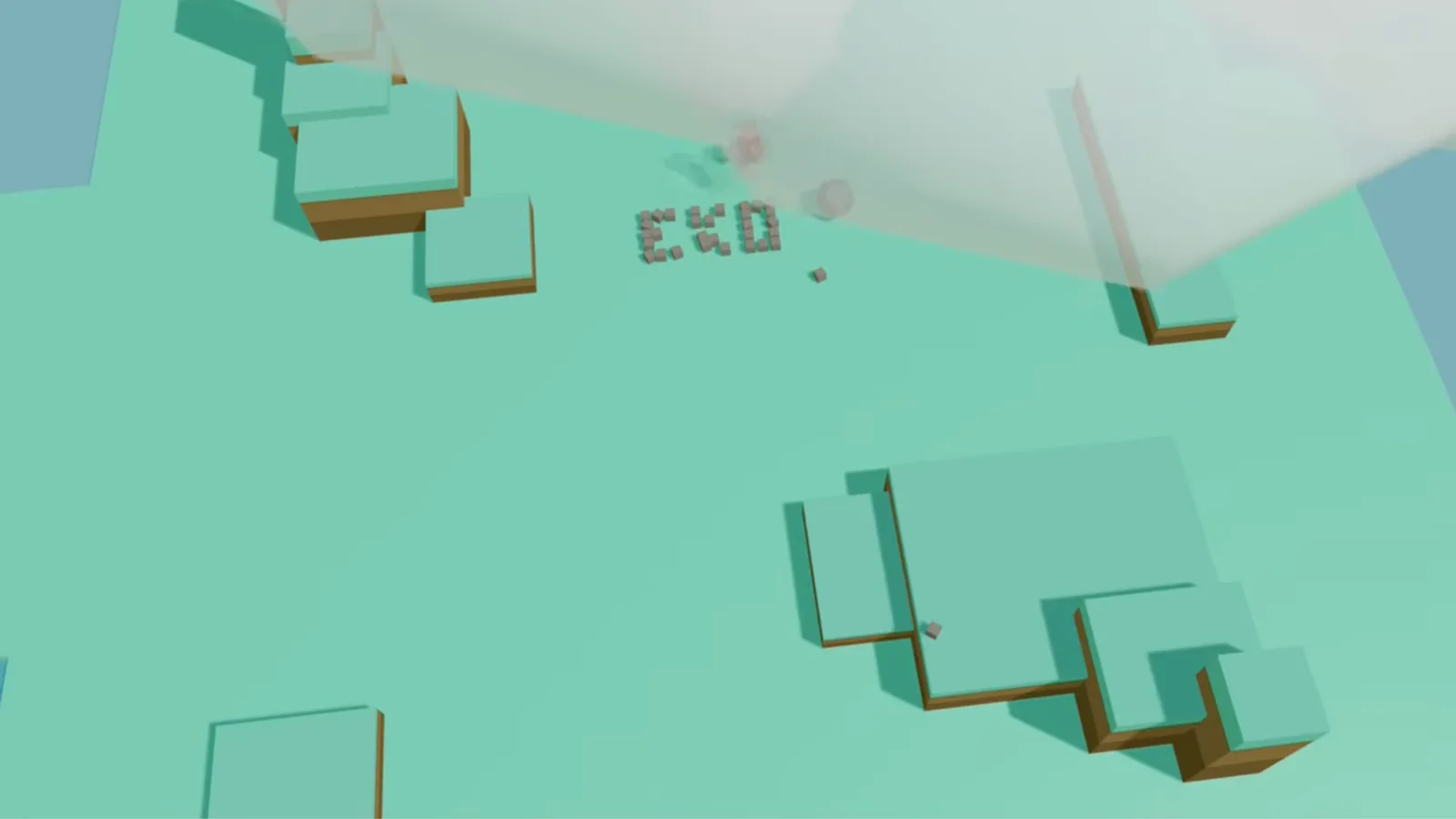
🏝️ MIT stranded an AI agent on an island, and it played
In summary: MIT researchers just published a study in which 13 Claude agents, given a virtual island and no task for 30 hours, stacked towers and invented bowling and basketball, then beat fresh agents at most building challenges they never trained for.
The details:
Each agent, called Eko, ran on Claude Code with Opus 4.7, a text-only view of the island, six actions and memory files that survived hourly resets
Asked to build as many five-block towers as possible in an hour, 62% of played agents built more than two, against 15% of fresh ones
Six agents found a mid-jump throw the researchers didn't know their simulator allowed, a quirk that was written into the physics code inadvertently
Eko's starting file told it that it was curious and got bored easily, though five runs without that file took up a similar range of activities.
Why it matters: Play is an integral part to creativity and design. So integral in fact, that the lack of play of AI generated designs and writing give them away instantly. As innocent as the games Eko created may sound, if AI models could indeed play, they have the potential to become infinitely more creative.
Source: Anthropic
🎨 The best free AI training to level up your game
In summary: The best resources to learn the basics of AI are free, unless you are after something very specific. The companies building AI models are all giving away better education than most paid resources. And the best part is that these are courses for everyone: whether you are an Architect, a Structural Engineer, a Project Manager, or else.
Here’s a useful reference list of learning resources without paywalls:
Open AI Academy: https://academy.openai.com
Anthropic Academy: https://academy.claude.com
Grow with Google: https://grow.google/ai
Microsoft Learn: https://learn.microsoft.com/en-gb/training/
Deep Learning AI: they have free courses, from beginner to advanced. Here are two popular beginner courses
AI Prompting for everyone: https://www.deeplearning.ai/courses/ai-prompting-for-everyone
From Idea to App (no code): https://www.deeplearning.ai/courses/build-with-andrew
IBM Skills Build: https://skillsbuild.org
In addition Hugging Face and NVIDIA offer specialist courses for people who want to learn to use open models. These can be a little more advanced:
HuggingFace: https://huggingface.co/learn
And for those who appreciate traditional education, Harvard offers a variety of free certifications. These two courses may appear abstract to most people in the AEC Industry, and will make many professionals roll up their eyes. I, on the other hand, learnt a huge amount taking the original CS50:
CS50's Introduction to Artificial Intelligence with Python: https://www.edx.org/learn/artificial-intelligence/harvard-university-cs50-s-introduction-to-artificial-intelligence-with-python
Applications of TinyML: https://www.edx.org/learn/tinyml/harvard-university-applications-of-tinyml
Trending AI Tools this week
Kimi K3.1 Pro (Moonshot AI): A huge 2.8T-parameter model with 1M-token context. open weights due 4 Nov
Claude Duet (Anthropic): Proactive agent app on Opus 5.5; and Anthropic’s response to Open AI Dots or Grok Bot. US waitlist only.
MiniMax M3.1 Flash (MiniMax): 1M-context agentic coding model
Voxtral 3 (Mistral): Speech-to-text across 50+ languages, expressive TTS and a voice-agent SDK; Mistral claims sub-second conversational turns
That’s it for today!
See you next week with more exciting updates,
Eduardo - The human behind AEC field notes
London, UK