

In this newsletter
This week’s developments
Source: ‘Dream’ Press Kit
🏗️ AI start-up Dream becomes Architect of record
In summary: Dream, a San Francisco start-up founded by two ex-Palantir employees, is already the Architect of record on 10 projects in California and Texas. The company just raised a $17M seed to build "built world models" that take a commercial building from floor plan to a buildable drawing set.
The details:
Founders Andy Elder and Arjun Mathur met studying computer science at Stanford, each spent a decade at Palantir, and neither has an architecture background
Dream says it trained its models on 9M+ sqm (100M+ sq ft) of real, permitted US buildings, and that they design "from the floor plan down to the ductwork behind the walls" in minutes, where it says the industry takes months
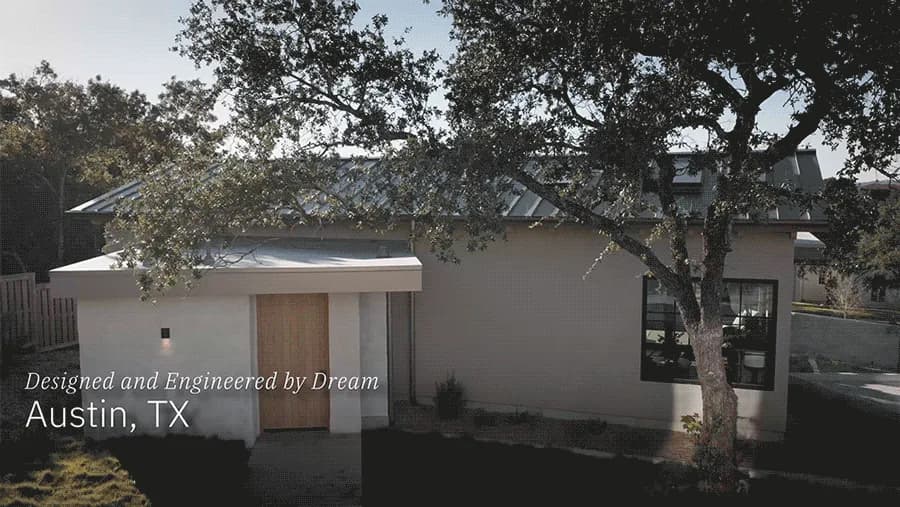
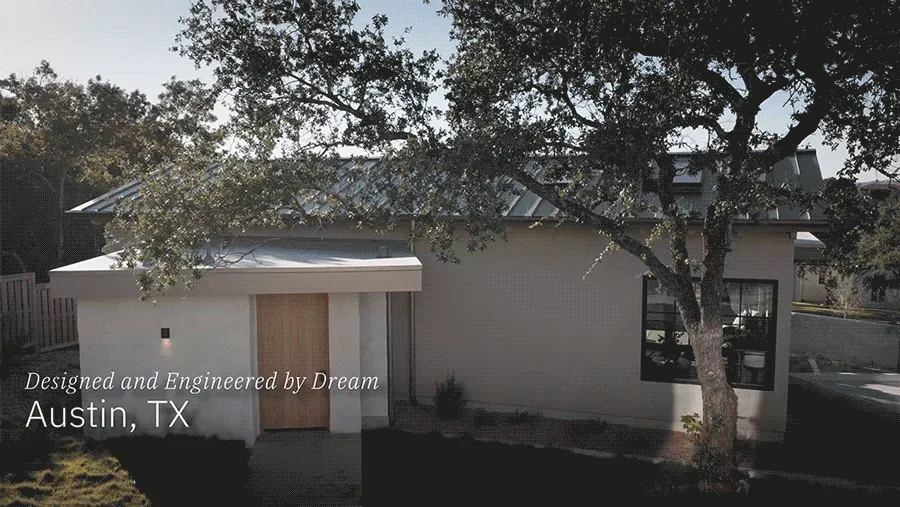
Dream is starting small: It puts the developments it has supported at $20M in total, with one project, a single-family home in Austin, completed from start to finish
Dream publishes no pricing and names no client
Why it matters: The AI model ‘Dream’ is developing is trained on plans that architects and engineers must submit to local authorities to obtain permits, and those authorities have made no effort to protect their IP. I could find no architect or engineers involved in Dreams’ projects, apart from the one architect on payroll. A ‘Dream’ client receives compliant construction documents that a general contractor can build from. Much of the built environment isn’t complex, meaning a significant portion of the AEC industry could be disrupted in the near future.
AEC's likely new hire: Architects (and other AEC professionals) in AI start-ups
Source: Snaptrude
📐 Snaptrude's new agent promises LOD 400 BIM in minutes
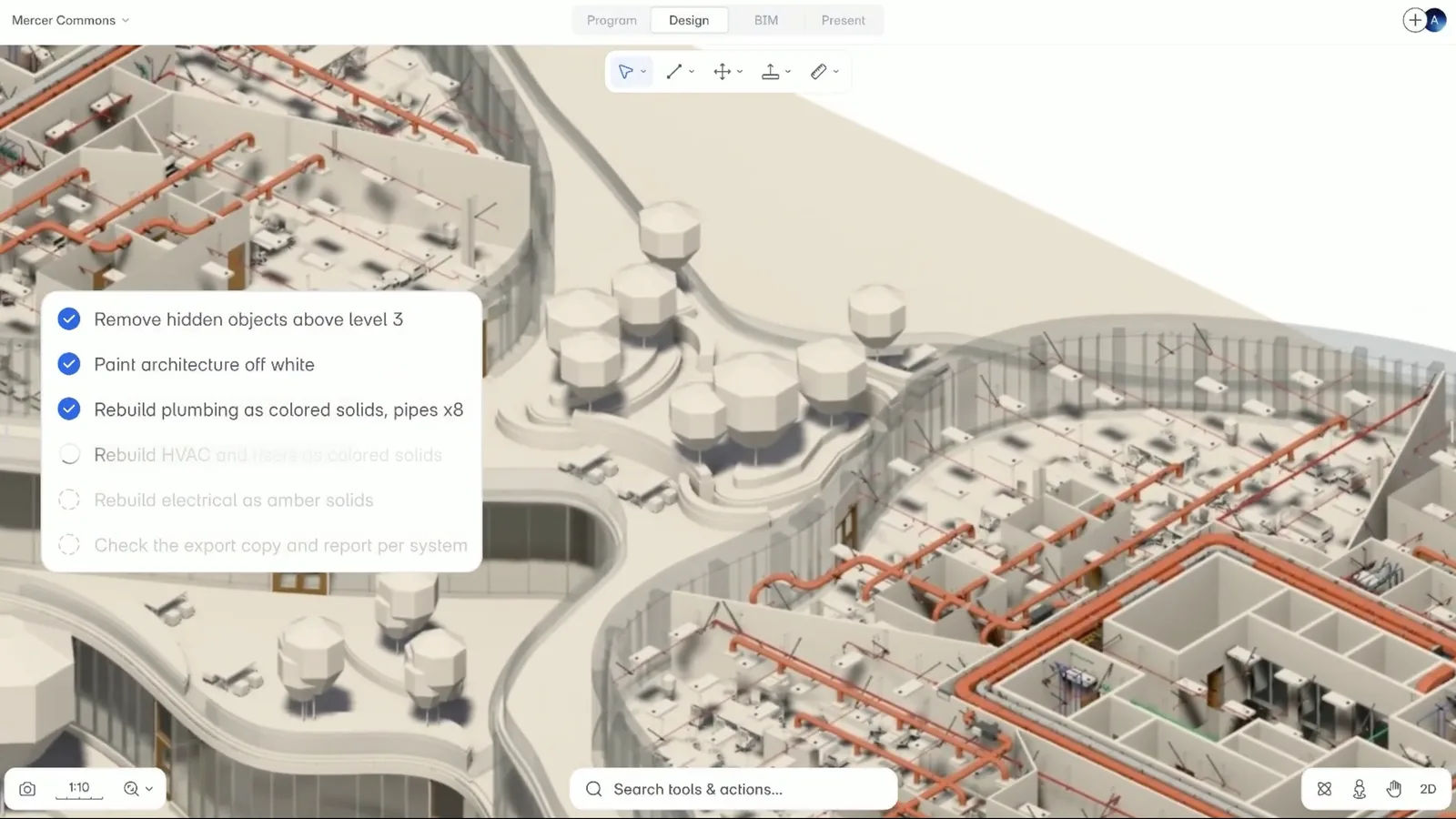
In summary: Snaptrude just launched Snaptrude Agent, an AI it says can take a project from early massing studies all the way to a construction-ready LOD 400 model with structure, MEP and drawings, then hand it back to Revit with native families.
The details:
CEO Altaf Ganihar says 2,000+ designers ran over 25,000 tasks in early access since September. The agent’s proposals require a designer’s approval, and it can model missing families from libraries using a vendor's spec sheet
Ganihar names Jacobs, Kajima, VMDO, Studio+ and Dekker among firms on Snaptrude, which opened its earlier Snaptrude AI to all users in October 2025
There's no independent LOD 400 test yet, and AECBench, which scores AI designs against a brief, is Snaptrude's own and launched without scores
Why it matters: Unlike ‘Dream’, which we covered previously, agentic BIM software is being built for AEC professionals. However, these softwares could change is the value of hiring independent architecture and engineering firms. Imagine what a developer–contractor partnership could do without them. Fees today in AEC firms are generally billed by the hour, so they’ll either shrink or have to move to value-based pricing. Given the profession’s habits, that move is unlikely.
AEC's likely new hire: Architects (and other AEC professionals) in Developers and Design & Build Contractors
Source: NVIDIA / HuggingFace
📦 NVIDIA's free 3D library gives objects real physics
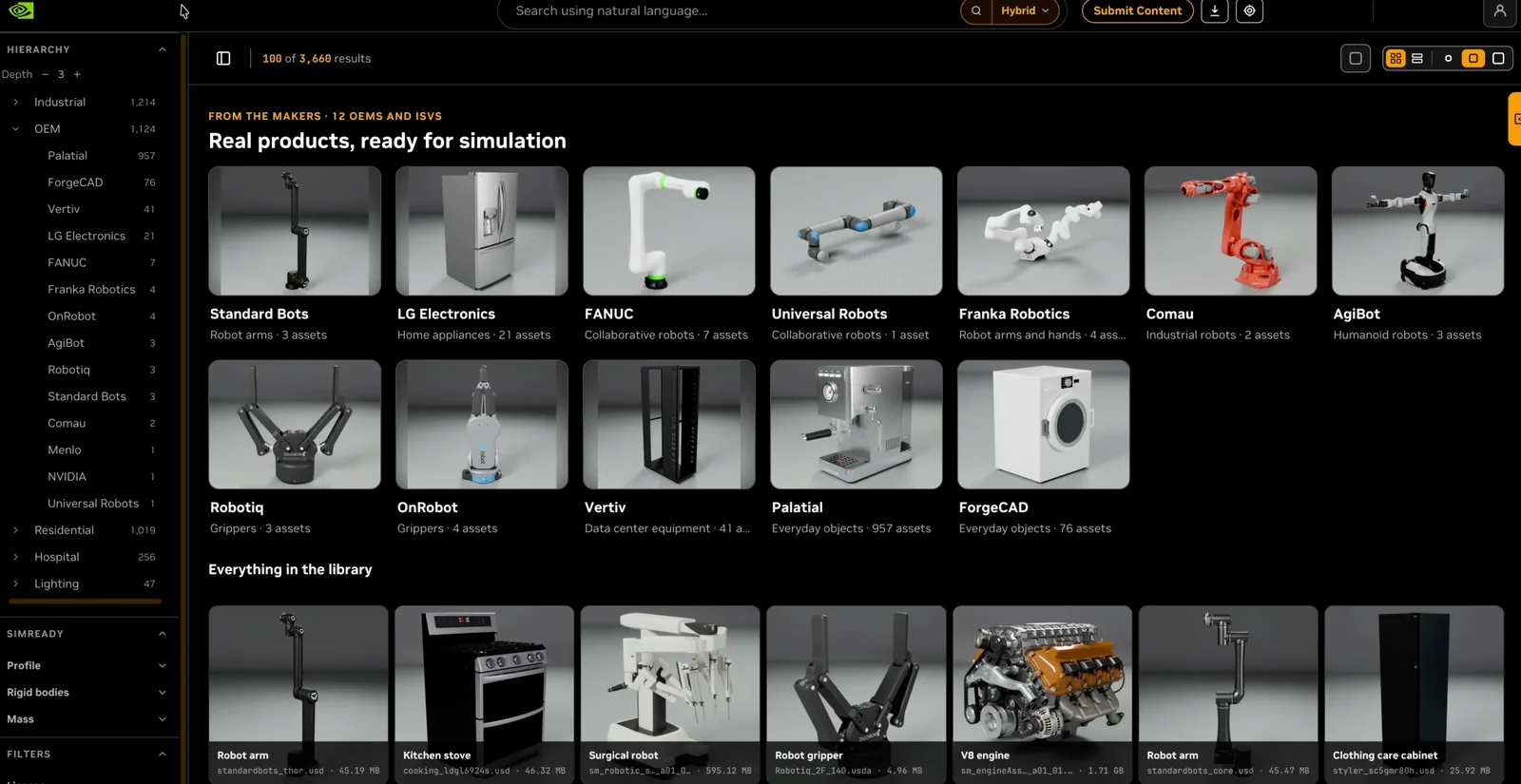
In summary: NVIDIA just launched SimReady Central on Hugging Face, a free, ungated library of 2,000+ OpenUSD assets that ship with the mass, friction, joints and collision data that robots and AI-factory digital twins need to simulate them.
The details:
The library includes 3D models supplied by supppliers in the AEC Industry. For example, Vertiv supplied server racks and cooling kit, while Comau, FANUC, Franka Robotics, Robotiq, Standard Bots and Universal Robots added arms and grippers
AI-factory assets carry electrical and thermal metadata for clearance checks and power and cooling studies, with scenes linkable to live BMS telemetry
NVIDIA's library is growing since it launched, today being 490 GB, and downloaded 839,384 times in the past month
The library is in alpha and OEMs set their own licences on HuggingFace, a platform NVIDIA agreed to buy for $12.9B in a deal due to close in the first half of 2027
Why it matters: Libraries like this speed up the training of robots that will eventually work in factories and on construction sites. NVIDIA can give them away because those robots will train on its GPUs, which makes the cost of building the libraries negligible. AEC suppliers have their own reason to release their 3D models for free: it keeps the robots compatible with what they sell. Expect this to become a self-reinforcing loop that brings robots onto building and construction sites sooner.
Source: Promise Robotics
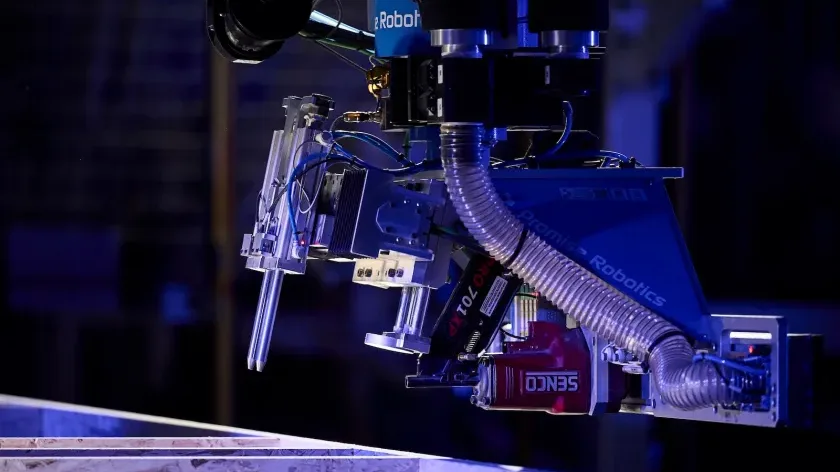
🤖 America's biggest homebuilder rents a robot factory
In summary: D.R. Horton just signed a multi-year deal for robot-built capacity from Promise Robotics covering 1,250+ homes, all in Phoenix, which is more than half a year of the largest U.S. builder's recent closings in that market.
The details:
Under Promise's Factory-as-a-Service model, the startup owns and runs the plants and robotics, while D.R. Horton simply buys the finished output.
Its AI reads a builder's existing plans and writes the machine instructions, then off-the-shelf industrial robots build the components on a factory line.
Promise has taken about 16,000 sq ft in Gilbert, Arizona, targeting production in early 2027, and a job posting says the site will serve multiple builders.
The 1,250 homes represents only about 1.5% of D.R. Horton's 84,863 homes in 2025, and neither the financial terms nor the communities were disclosed.
Why it matters: Off-site manufacturing is a 20th-century promise that AI might finally deliver. In my experience, it fell short for two main reasons. Developers tried to build the factories themselves, so they had to fund them and keep a pipeline of projects to feed them. And every factory I visited was rigid, with strict limits on what it could make, so it couldn’t adapt to different designs. A factory where an AI model produces the manufacturing information for buildings designed elsewhere is different, and makes it far more adaptable and lets it serve many builders. It’s worth noting that America’s largest homebuilder sees potential in off-site manufacturing again.
AEC's likely new hire: Architects and Engineers with DFMA experience
🥒 Full Guide: How Claude Opus 5.5 modelled The Gherkin
In summary: I used Claude Opus 5.5 to rebuild The Gherkin in Blender from public planning drawings, most of them 1999 paper scans, and I am sharing every prompt plus the skills I developed for this project, in full.
Use the links below to access it:
Full Guide: https://aecfieldnotes.ai/learn/how-opus-5-5-3d-modelled-the-gherkin
Files: https://github.com/EduardoAndreu/the_gherkin_tutorial
This is an advanced tutorial. It assumes you’re familiar with Claude Code and concepts such as Skills and MCPs, and that you have Python installed and know how to set up a local Python environment. It also assumes you have downloaded and installed Blender 5.2, and you have connected Claude Code to Blender via its MCP, or are able to use Claude’s official connector.
I’m aware that’s a huge ask! If you aren’t familiar with these, fear not: I’ve included plenty of imagery to give any reader a glimpse of the work behind this project, and I’ll be creating a separate beginners’ tutorial soon to make this type of content more inclusive.
Trending AI Tools this week
Genie 4 (Google DeepMind): Real-time interactive world model with native audio; on research preview now. World models are a particularly important to train robots, and this looks like a particularly promising one
Gemini 4 Carbon (Google): Cyber-focused frontier model, 88.2% on SEC-bench Pro per Google; vetted defenders get access first
GPT-6.1 Terra (OpenAI): Mid-tier computer-use model at half GPT-6.1 Sol's price
Mistral Large 4 (Mistral): Open weights for 1-trillion-parameter multimodal MoE; Mistral claims best open model for coding
Artifacts for legal work (Anthropic): Claude for Legal adds shareable cite-check and contract-review tools plus 60+ legal connectors
File editing in Gemini (Google): Generate, preview and edit PDFs, Docs, Sheets and slides inside Gemini, available to all users
That’s it for today!
See you next week with more exciting updates,
Eduardo - The human behind AEC field notes
London, UK